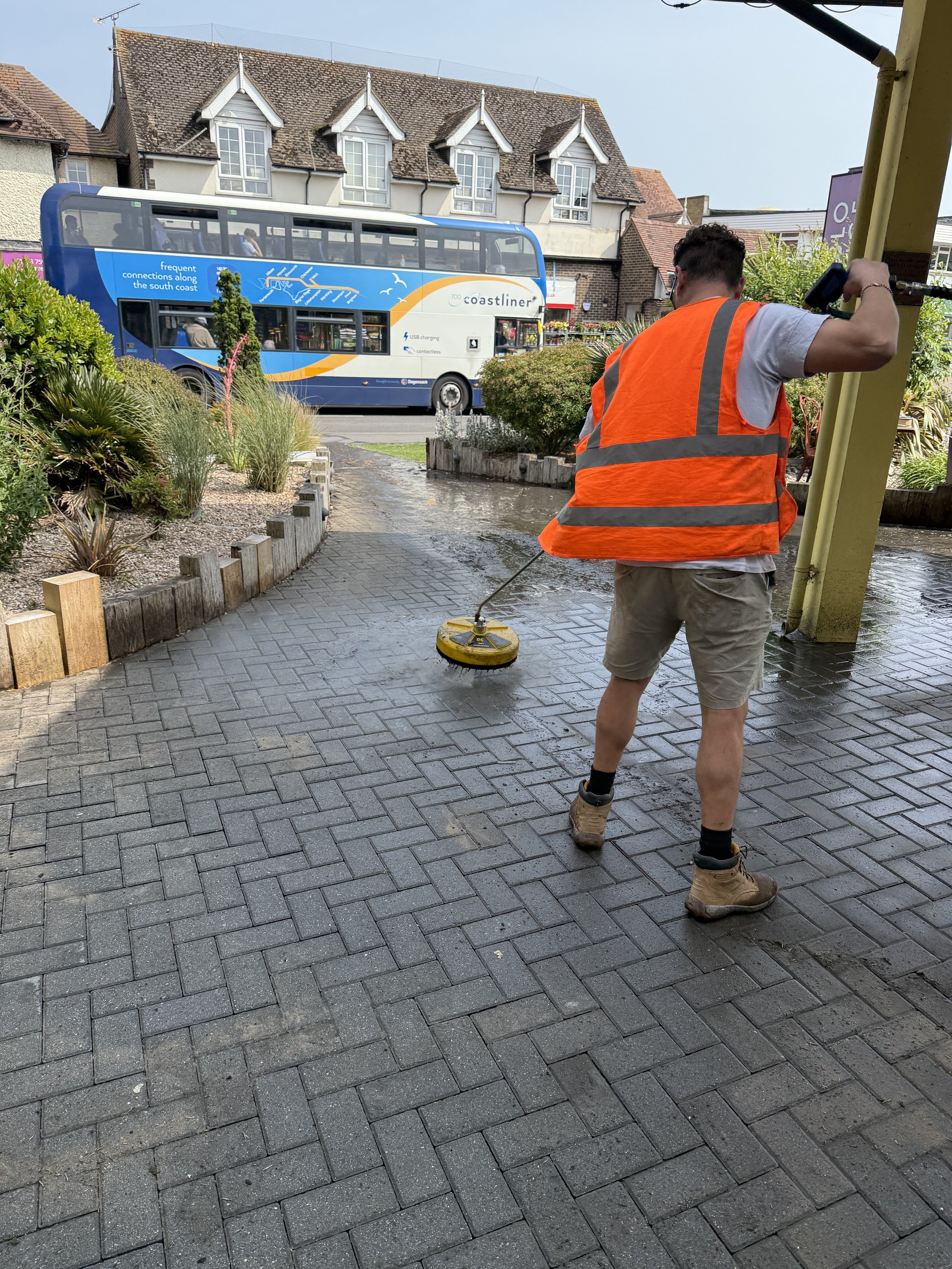
Pressure washing service
Why Pressure washing matters
Pressure washing is a powerful, efficient method for cleaning exterior surfaces using high-pressure water spray. It removes dirt, mold, mildew, algae, loose paint, gum, oil stains, and other contaminants from surfaces such as driveways, sidewalks, patios, decks, siding, fences, roofs, and commercial storefronts.
When to use pressure washing
Before painting or staining: Removes loose paint and surface contaminants for better adhesion.
Routine maintenance: Keeps surfaces looking clean and extends the life of materials by preventing rot and degradation from biological growth.
After seasonal buildup: Removes pollen, salt, and grime accumulated during winter or spring.
For safety: Eliminates slippery algae and oil that can create fall hazards on walkways and ramps.
Before selling or showing property: Improves curb appeal quickly and cost-effectively.
Common services provided
Driveway and concrete cleaning: Removes oil stains, tire marks, and surface dirt; can improve appearance and safety.
Deck and fence restoration: Removes mildew and old stain, preparing wood for sanding and refinishing.
House siding cleaning: Removes dirt, pollen, and biological growth to restore appearance and prevent decay.
Roof cleaning (soft wash): Removes algae and moss safely without high pressure that can damage shingles.
Commercial property cleaning: Storefronts, sidewalks, loading docks, and parking areas.
Graffiti removal: Pressure plus appropriate solvents to restore surfaces.
Fleet and equipment washing: Removes grease, salt, and grime from commercial vehicles and machinery.
Pros and cons Pros:
Fast and effective for large exterior areas.
Improves curb appeal and property value.
Preventative maintenance that can extend the life of surfaces.
Versatile: suitable for residential, commercial, and industrial uses.
Estimated cost factors
Size of area and surface type.
Level of soiling and presence of stains requiring special treatment.
Access and site conditions (steep slopes, scaffolding).
Use of detergents, hot water, or specialized equipment.
Local labor rates and whether the provider is insured and certified.
Tips for hiring a professional
Check reviews and ask for references or before-and-after photos.
Verify insurance and any required local licensing.
Request a written estimate detailing scope, price, and any chemical use.
Ask about surface protection measures and cleanup practices for runoff.
Confirm whether they offer guarantees or follow-up spot treatments.
By applying proper technique, equipment, and safety practices, pressure washing is a cost-effective way to maintain and restore exterior surfaces. For a precise estimate or to discuss a specific project, please get in touch.
Why Pressure washing matters
Pressure washing is a powerful, efficient method for cleaning exterior surfaces using high-pressure water spray. It removes dirt, mold, mildew, algae, loose paint, gum, oil stains, and other contaminants from surfaces such as driveways, sidewalks, patios, decks, siding, fences, roofs, and commercial storefronts.
When to use pressure washing
Before painting or staining: Removes loose paint and surface contaminants for better adhesion.
Routine maintenance: Keeps surfaces looking clean and extends the life of materials by preventing rot and degradation from biological growth.
After seasonal buildup: Removes pollen, salt, and grime accumulated during winter or spring.
For safety: Eliminates slippery algae and oil that can create fall hazards on walkways and ramps.
Before selling or showing property: Improves curb appeal quickly and cost-effectively.
Common services provided
Driveway and concrete cleaning: Removes oil stains, tire marks, and surface dirt; can improve appearance and safety.
Deck and fence restoration: Removes mildew and old stain, preparing wood for sanding and refinishing.
House siding cleaning: Removes dirt, pollen, and biological growth to restore appearance and prevent decay.
Roof cleaning (soft wash): Removes algae and moss safely without high pressure that can damage shingles.
Commercial property cleaning: Storefronts, sidewalks, loading docks, and parking areas.
Graffiti removal: Pressure plus appropriate solvents to restore surfaces.
Fleet and equipment washing: Removes grease, salt, and grime from commercial vehicles and machinery.
Pros and cons Pros:
Fast and effective for large exterior areas.
Improves curb appeal and property value.
Preventative maintenance that can extend the life of surfaces.
Versatile: suitable for residential, commercial, and industrial uses.
Estimated cost factors
Size of area and surface type.
Level of soiling and presence of stains requiring special treatment.
Access and site conditions (steep slopes, scaffolding).
Use of detergents, hot water, or specialized equipment.
Local labor rates and whether the provider is insured and certified.
Tips for hiring a professional
Check reviews and ask for references or before-and-after photos.
Verify insurance and any required local licensing.
Request a written estimate detailing scope, price, and any chemical use.
Ask about surface protection measures and cleanup practices for runoff.
Confirm whether they offer guarantees or follow-up spot treatments.
By applying proper technique, equipment, and safety practices, pressure washing is a cost-effective way to maintain and restore exterior surfaces. For a precise estimate or to discuss a specific project, please get in touch.